
The role of mould, biofilms, and your vaginal microbiome.
You have been getting UTIs for years, perhaps decades. They keep coming back while you keep D-mannose next to your bed, always wipe front to back, and have taken more courses of antibiotics than you can remember.
I have written this article for anyone who is about to resign herself to getting UTIs forever.
In this article:
- How the vaginal microbiome is directly connected to the bladder
- What biofilms are and why antibiotics barely touch the edges
- Why standard urine testing misses the picture
- Your gut, your sexual partner, and mould
- The emotional dimension of UTIs
- What supports recovery, including nutrition
Why looking at the vaginal microbiome is essential
Most people think of a UTI as a bladder problem, but for many women the real problem begins in the vagina. The vaginal and urethral openings are very close to each other, and whatever lives in the vaginal environment can directly access the urinary tract.
When the vaginal microbiome is healthy, it protects the bladder. The vagina should ideally be dominated by Lactobacillus species – and when these are depleted, usually through repeated antibiotic use, the entire environment becomes vulnerable to pathogens.
BV-associated organisms like Gardnerella, Prevotella, and Ureaplasma colonise the vaginal wall and migrate to the bladder. This is why, women with BV have a two to thirteen times higher risk of UTI than women with a Lactobacillus-dominant microbiome.
For this reason, I routinely also test the vaginal microbiome in women with recurrent UTIs.
The biofilm problem and why antibiotics keep failing
Organisms do not simply float freely inside the body. They create structured communities: dense, three-dimensional “cities” in which they live together, often alongside yeasts and other organisms. Once embedded in the bladder wall, these biofilms are up to a thousand times more resistant to antibiotics than free-floating bacteria.
What you experience as a flare-up is likely the biofilm periodically rupturing and spilling pathogens back into the bladder. It looks like a new infection. It is the same infection, surfacing again.
Each antibiotic course kills the bacteria that have spilled out but does not touch the biofilm. Each course also depletes Lactobacillus further, raises vaginal pH, and makes the next infection more likely.
These organisms are remarkably adaptive. Inside the biofilm they communicate with each other, actively pump antibiotics out of their structure, and alert the whole community to what is coming. Some shed their cell walls entirely as a defence mechanism, making them invisible to antibiotics that work specifically on the cell wall.
Long-term antibiotic use without addressing the biofilm makes the situation progressively harder to treat.
Some women are also genetically predisposed to form denser and more persistent biofilms. If your UTIs are particularly treatment-resistant and you have a family history of miscarriage, clotting, or cardiovascular disease, this may be worth investigating.
Why standard testing misses the picture
Organisms living inside biofilms are largely invisible to standard urine dipstick testing and culture. This is why tests can come back negative while a significant infection is still thriving in the bladder wall, and you are still having symptoms.
Why gut health matters
E. coli, the most common UTI pathogen, originates in the gut. When the gut microbiome is disrupted by repeated antibiotics, poor diet, or stress, E. coli populations expand and migrate from gut to perineum to vagina to urethra. A disrupted gut feeds a disrupted vaginal environment. You cannot fully address recurrent UTIs without addressing gut health.
Your sexual partner
If your UTIs tend to flare after intercourse, your partner needs to be investigated. Many men carry urinary pathogens in their semen while being completely asymptomatic. Both partners need testing and treatment simultaneously, abstaining from unprotected intercourse during treatment.
Mould, mycotoxins, and immune suppression
This is an important and frequently overlooked piece for women whose infections are treatment-resistant.
Mycotoxins are produced by mould in water-damaged buildings and are also present in non-organic cereals, grains, and coffee. They are profoundly damaging to immunity – suppressing T and B lymphocytes, reducing antibody production, and creating chronic immune dysregulation. When the immune system is chronically suppressed it cannot clear bacteria from the urinary tract, regardless of how many antibiotics are taken.
One of the mycotoxins I see most often in clients with chronic UTIs is Ochratoxin A. If you also experience fatigue, brain fog, or histamine reactions, and you notice damp in your home or workplace, this needs to be investigated.
When mould is present it must be addressed first. Attempting to clear bladder biofilms on a suppressed immune system is like trying to drain a bath with the tap still running.
The emotional dimension
Notice whether there is an emotional pattern before each flare-up. What is happening in the days before the infection arrives?
In my clinical experience there is often something significant. A boundary not set. Something that needed to be said and hasn’t been. Anger that is not being processed…
I offer this not as a diagnosis but as an invitation to look at the whole picture. The body and the psyche are not separate systems.
What supports recovery
Homeobotanical remedies
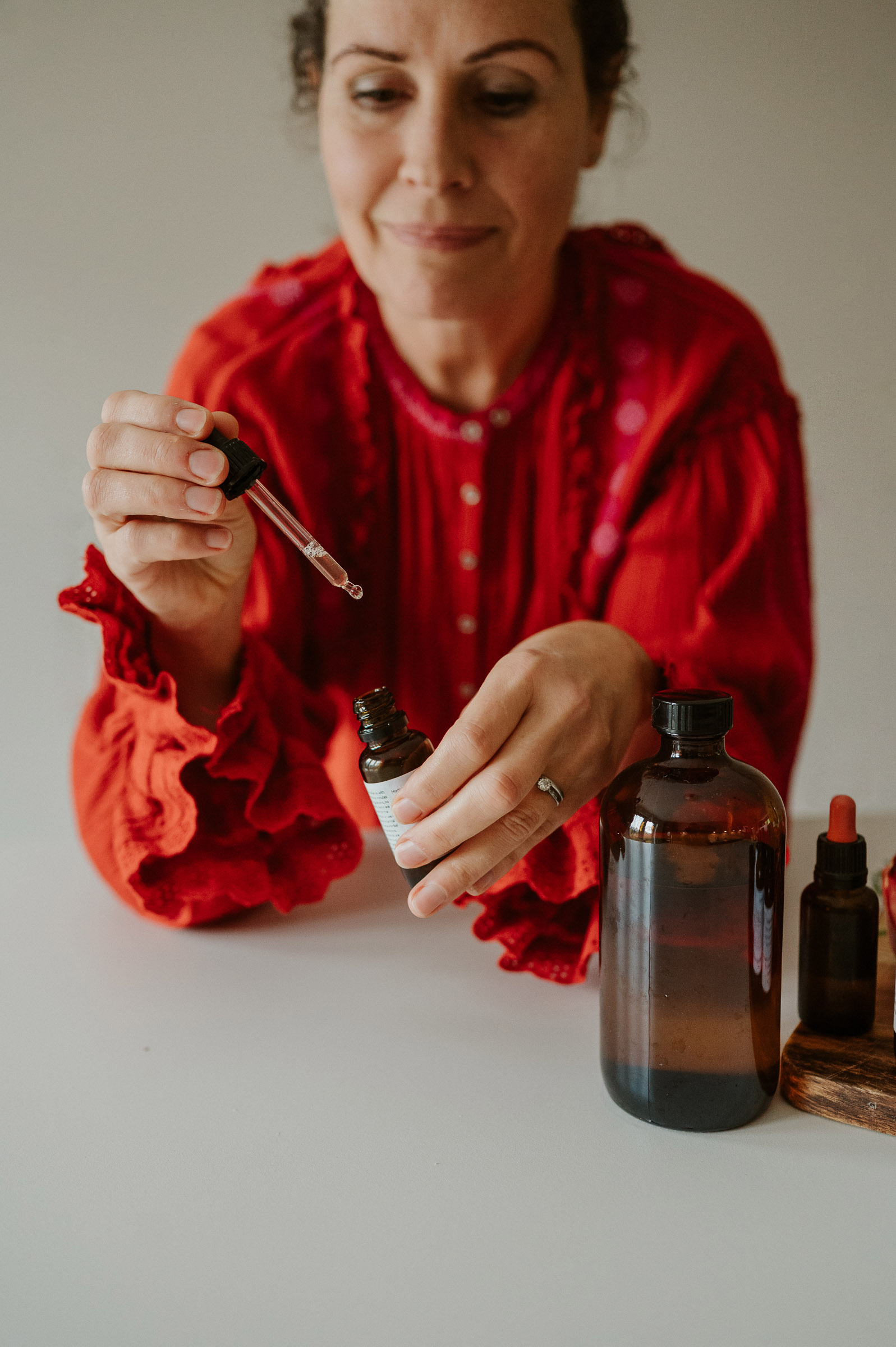
These are organic herbal extracts that I blend individually for each client, potentised homeopathically to work on all layers – physical, energetic, and emotional. They support drainage and immune function, and can help emotions come to the surface where this is part of the picture.
Nutrition
The most common dietary triggers I see are sugar, artificial sweeteners, coffee, and alcohol. Food sensitivities and oxalates can also irritate the urinary tract in some women. My nutritional recommendations are always tailored individually as unfortunately there is no single diet for recurrent UTIs or interstitial cystitis.
Hydration
Drink drink and drink…plenty of warm or hot water throughout the day to help flush pathogens from the bladder. Urinate at first urge rather than holding, and always urinate after sexual intercourse.
Parsley tea
One of my favourite simple remedies. Steep a bunch of organic parsley leaves in hot water for fifteen minutes. Parsley is a mild diuretic that helps remove pathogens from the bladder while supporting kidney function. It’s gentle, accessible, and something you can do today.
D-mannose
Useful particularly for post-coital UTIs and works primarily against E. coli. It has limited effect on the other organisms often present in chronic and complex UTIs.
Probiotics
Lactobacillus strains can help normalise both the gut and vaginal microbiome and are an important part of recovery.
A note on antibiotics
Everything above is for chronic and mild infections. If an infection is moving to the kidneys – with fever, nausea, or lower back pain – please seek medical attention promptly. Antibiotics are necessary in that situation and should not be delayed.
There is hope
I have helped women who have had UTIs for decades. The body is always trying to find balance, even when it doesn’t feel that way.
If this resonates, I offer vaginal and urinary microbiome testing through my practice in Petersfield and online worldwide, as well as comprehensive investigation of the root causes of recurrent UTIs. You are welcome to message me directly on contact@magdajenkins.com.
References
Recurrent Uncomplicated Urinary Tract Infections in Women: AUA/CUA/SUFU Guideline (2025), American Urological Association